The Numbers Don't Lie: Chinese Cars Are Reshaping the GCC Market
Six years ago, a Chinese-branded car was a rarity on Sheikh Zayed Road. Today, they're impossible to miss. According to automotive research firm Roland Berger, Chinese OEMs have grown their GCC market share from just 2% in 2019 to an estimated 15% by 2025 — a seven-fold increase in under a decade. That is not a trend. That is a structural shift in how the Gulf buys cars.
In the UAE specifically, the numbers are even more striking. Industry data from AutoData shows that Chinese brands now account for 10 to 15 percent of all new-car sales in the UAE in the first half of 2025, and 12 percent in Saudi Arabia. The UAE also became the world's largest single importer of Chinese vehicles in 2025, absorbing 255,489 units — a 54.5% year-on-year jump. Saudi Arabia followed with 138,527 units, up 24.4%.
So what is actually going on, and what does it mean for a buyer in Dubai, Abu Dhabi, or Sharjah right now?
Which Chinese Brands Are Actually Available Here?
The GCC is no longer just an MG market. The brand landscape has expanded rapidly, with serious distribution infrastructure backing each major player:
- BYD — The global EV giant is expanding its UAE dealership network into Sharjah, Ras Al Khaimah, and Al Ain. BYD has publicly targeted selling up to 10,000 vehicles annually in the UAE, gunning for a 2–3% market share. The recently arrived Atto 8 seven-seat SUV is its flagship push for GCC family buyers.
- Geely — Owned by the same group that controls Volvo and Lotus, Geely is distributed by AGMC in the UAE and has grown to five showrooms across Dubai, Sharjah, Ras Al Khaimah, and Abu Dhabi, including a flagship location opened in Abu Dhabi in January 2025.
- Haval — Distributed through Swaidan Trading (part of Al Naboodah Group), Haval has become the go-to Chinese brand for buyers who want genuine off-road capability. The H9 is a consistent top-seller, and the new V7 fills the mid-size gap between the H6 and H9.
- MG — Now Chinese-owned by SAIC, MG enjoys strong brand familiarity and an established service network across the GCC. It remains one of the most affordable entries into new-car ownership in the region.
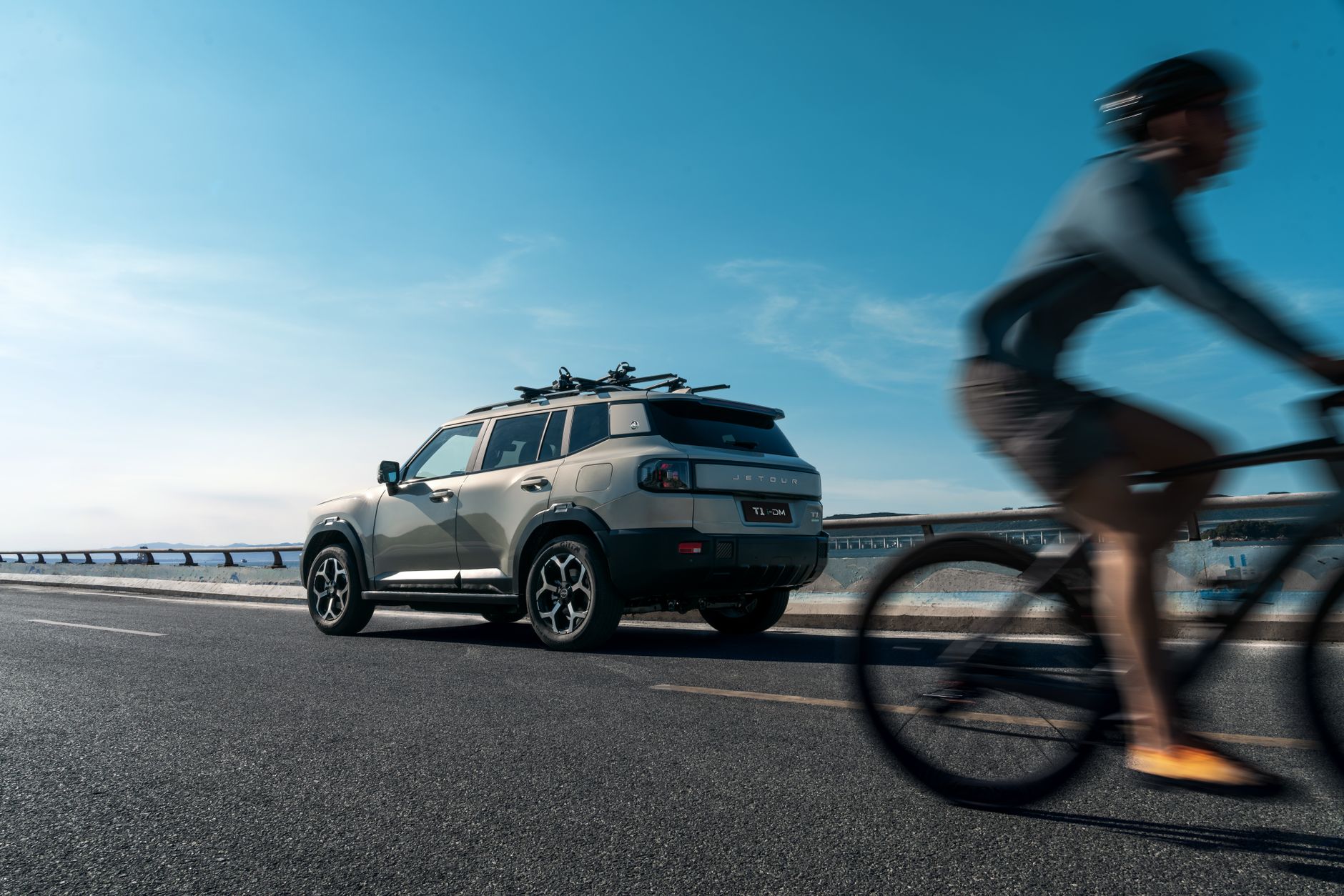
- Chery, Changan, and Jetour — All three are expanding rapidly. Jetour ranked among the top newcomers in GCC sales charts in 2024, confirming buyer appetite for its bold styling and competitive specs.
Major established dealer groups are paying attention too. The Gargash Group — one of the UAE's most prestigious automotive distributors — has moved to bring additional Chinese brands into its portfolio, signalling that the industry's traditional gatekeepers now see these brands as mainstream, not experimental.
Why Are GCC Buyers Switching?
The appeal is not simply about price, though price is obviously a factor. Chinese cars in the UAE start at around AED 50,000 for entry-level models and stretch to over AED 300,000 for premium EVs and flagship SUVs — meaning there is a Chinese product competing at almost every segment of the market.
Beyond affordability, three factors are accelerating adoption across the GCC:
- Technology loaded as standard. Chinese manufacturers routinely pack large touchscreens, 360-degree cameras, and ADAS driver-assist systems into base trims — equipment that rivals charge significant premiums for. For a buyer in Dubai who wants tech without a five-year loan on a German SUV, that equation is compelling.
- Serious warranty commitments. To overcome residual hesitation, brands like BYD and Geely are offering warranties of up to 8 years or 160,000 km on certain models — directly addressing long-term reliability concerns.
- EV infrastructure alignment. Electric vehicle sales across the Middle East hit approximately 75,000 units in 2025, growing over 40% year-on-year according to the IEA's Global EV Outlook 2026. Chinese brands are at the centre of that growth, benefiting from the UAE's expanding charging network and green-mobility incentives.
The Honest Concerns: What to Weigh Before Buying
Enthusiasm should be balanced with clear-eyed thinking. Put these questions to any Chinese brand dealer before signing:
- Resale value. Most Chinese brands in the GCC are less than five years old as established presences, which means limited used-market data to project depreciation confidently. Buyers planning to sell within three years carry more residual-value risk than those who plan to hold longer.
- Parts and service depth. Brands backed by major dealer groups — Geely through AGMC, Haval through Al Naboodah — have the infrastructure of a serious franchised network. Newer or smaller brands may still be building out service depth outside Dubai and Abu Dhabi.
- Model lifecycle pace. Chinese manufacturers refresh their lineups very quickly by global standards. A model bought today may be superseded by a significantly updated version within two or three years, affecting perceived desirability and resale.
Treat a Chinese-brand purchase the same way you would any other: check the dealer group's track record, confirm parts availability in your emirate, and read the warranty terms carefully — not just the headline number of years.
The GCC Pecking Order Is Changing
Industry projections suggest the 15% GCC market share figure is a floor, not a ceiling. As manufacturers deepen their local investment — with long-term service infrastructure commitments, not just import agreements — the product quality and after-sales experience will keep improving.
For buyers, the competition among all brands is unambiguously good news. The presence of credible Chinese alternatives is pushing Japanese, Korean, and European manufacturers to improve value, extend warranties, and sharpen pricing across the board.
Whether you are exploring a brand-new Chinese SUV through official dealers via the Car Circle Showroom, comparing certified pre-owned options in the Marketplace, or browsing for a rental to test a model before committing, the UAE market today offers more choice at more price points than at any point in its history. Do your research, shortlist carefully, and negotiate on warranty terms as hard as you would on the sticker price.